
Calcium Carbonate (CaCO₃)
 Product Over view
Calcium Carbonate (CaCO₃) is a widely used mineral for industrial, food, agricultural and technical applications. Its performance depends on purity, particle size, whiteness, morphology and surface properties.
Commercial Calcium Carbonate mainly comes in two forms: Ground Calcium Carbonate (GCC) and Precipitated Calcium Carbonate (PCC). GCC comes from natural calcium carbonate minerals, while PCC uses a controlled precipitation process.
Therefore, buyers should select Calcium Carbonate according to the final application rather than CaCO₃ content alone.Source: IMA Europe – Calcium Carbonate
 Technical Specifications
Commercial specifications vary according to grade and application. Typical parameters include:
- Chemical Formula: CaCO₃
- CAS No.: 471-34-1
- Molecular Weight: 100.09 g/mol
- Physical Form: White powder
- Appearance: Fine white mineral powder
- CaCO₃ Content: Grade-dependent; high-purity grades can exceed 98%
- Whiteness / Brightness: Grade-dependent
- Particle Size: Available in coarse, fine and micronized grades
- Particle Size Distribution: Application-dependent
- Moisture / Loss on Drying: Grade-dependent
- Surface Treatment: Available for selected industrial grades
- Food Additive Number: INS 170(i), where applicable
- HS Code: 2836.50
- UN Number: Generally not assigned to standard Calcium Carbonate; confirm the applicable SDS for each shipment
JECFA specifies Calcium Carbonate as CAS 471-34-1 with the formula CaCO₃ and formula weight 100.09. For the JECFA food additive specification, the assay must be at least 98.0% after drying. The specification also includes limits for loss on drying, acid-insoluble substances, barium and fluoride.
Source: https://www.fao.org/fileadmin/user_upload/jecfa_additives/docs/Monograph1/Additive-075.pdf
Source: https://www.fao.org/food/food-safety-quality/scientific-advice/jecfa/jecfa-additives/detail/en/c/36/
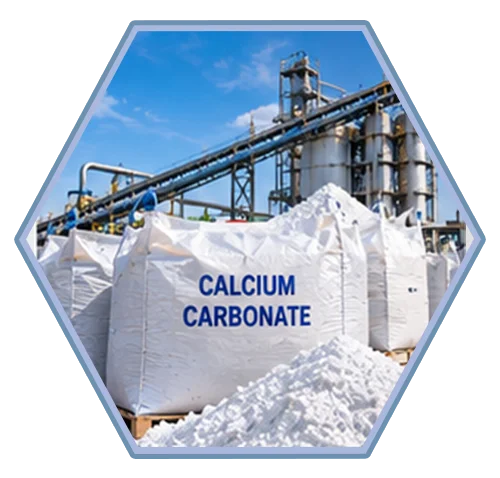




Production process
Calcium Carbonate has the chemical formula CaCO₃ and CAS No. 471-34-1. It occurs naturally in minerals such as limestone, chalk and marble.
Manufacturers process these raw materials into different commercial grades. As a result, available products can vary in purity, brightness, particle size, morphology and surface characteristics.
For this reason, the required specification should match the end use and processing conditions.
Source: https://ima-europe.eu/about-industrial-minerals/calcium-carbonate/
 Main Commercial Types
A. Ground Calcium Carbonate (GCC)
GCC comes from natural calcium carbonate deposits. Producers crush, grind and classify the mineral to achieve the required particle size.
GCC offers a broad range of grades and particle sizes. Therefore, manufacturers use it across paper, plastics, rubber, paints, coatings, adhesives, sealants and construction materials.
Some producers also apply surface treatments. These treatments can improve compatibility with selected polymers and formulations Source: IMA Europe – Calcium Carbonate
B. Precipitated Calcium Carbonate (PCC)
PCC uses a controlled chemical precipitation process. This approach gives manufacturers greater control over particle size, morphology and surface properties.
As a result, PCC can support applications that require more controlled physical characteristics than conventional GCC. Source: https://ima-europe.eu/about-industrial-minerals/calcium-carbonate/
C. Surface-Treated Calcium Carbonate
Surface-treated grades have a modified particle surface. The treatment can improve dispersion and compatibility with selected polymers, coatings and other formulations.
Therefore, these grades can offer advantages in applications where conventional Calcium Carbonate does not provide the required interaction with the surrounding material. Source: Omya – Minerals Applications
⚙️ Key Properties
Calcium Carbonate combines useful mineral content with controllable physical properties. However, the most important parameter depends on the application.
High CaCO₃ Content
High-purity grades provide a high concentration of Calcium Carbonate. At the same time, buyers should also review impurity levels and other critical parameters.
For food-grade Calcium Carbonate, JECFA specifies an assay of not less than 98.0% after drying. Source: https://www.fao.org/fileadmin/user_upload/jecfa_additives/docs/Monograph1/Additive-075.pdf
Whiteness
Whiteness plays an important role in paper, paints, coatings and selected plastics applications. Therefore, buyers should define the required brightness level before supplier comparison.
Calcium Carbonate is widely used as a filler and coating pigment because of its white characteristics and the range of grades available. Source: https://ima-europe.eu/about-industrial-minerals/calcium-carbonate/
Particle Size
Particle size affects dispersion, opacity, surface finish, rheology and processing performance.
For demanding applications, buyers should specify the target D50 and particle-size distribution.
IMA Europe notes that Calcium Carbonate grades can be tailored through fineness and particle-size distribution to meet specific technical requirements. Source: https://ima-europe.eu/about-industrial-minerals/calcium-carbonate/
Particle Morphology
Particle morphology can influence dispersion and formulation performance. PCC offers greater control over particle shape and structure than conventional GCC. Source: https://ima-europe.eu/about-industrial-minerals/calcium-carbonate/
Surface Treatment
Surface treatment can improve compatibility between Calcium Carbonate and selected polymers, coatings or other formulation components.
Consequently, surface-treated grades may provide better performance in specific polymer and coating systems. Source: https://www.products.omya.com/products?category=technologies-case-ingredients-additives&filters=chemical-family-carbonates
 Grade Selection by Application
The right Calcium Carbonate grade depends on the final application and processing requirements.
Paper: Select GCC or PCC with suitable brightness, particle size and optical properties.
Plastics: Fine, micronized or surface-treated grades may offer better dispersion and polymer compatibility.
Paints & Coatings: Select grades with suitable whiteness, particle size and oil absorption.
Rubber: Choose the grade according to particle size, dispersion and formulation requirements.
Food: Use only food-grade Calcium Carbonate that meets the applicable food additive requirements.
Agriculture: Select agricultural grades according to calcium content, neutralizing value, particle size and local regulations.
Importantly, two products can show similar CaCO₃ content but deliver different results. Particle size, morphology, surface treatment and impurity levels can significantly affect performance. Source: https://ima-europe.eu/about-industrial-minerals/calcium-carbonate/
 Packaging & Supply
Suppliers can offer Calcium Carbonate in different packaging formats according to grade, quantity and handling requirements.
Typical options include:
- 25 kg bags
- 20–25 kg paper or polypropylene bags
- 500–1,000 kg Jumbo Bags / FIBCs
- Bulk supply for suitable high-volume applications
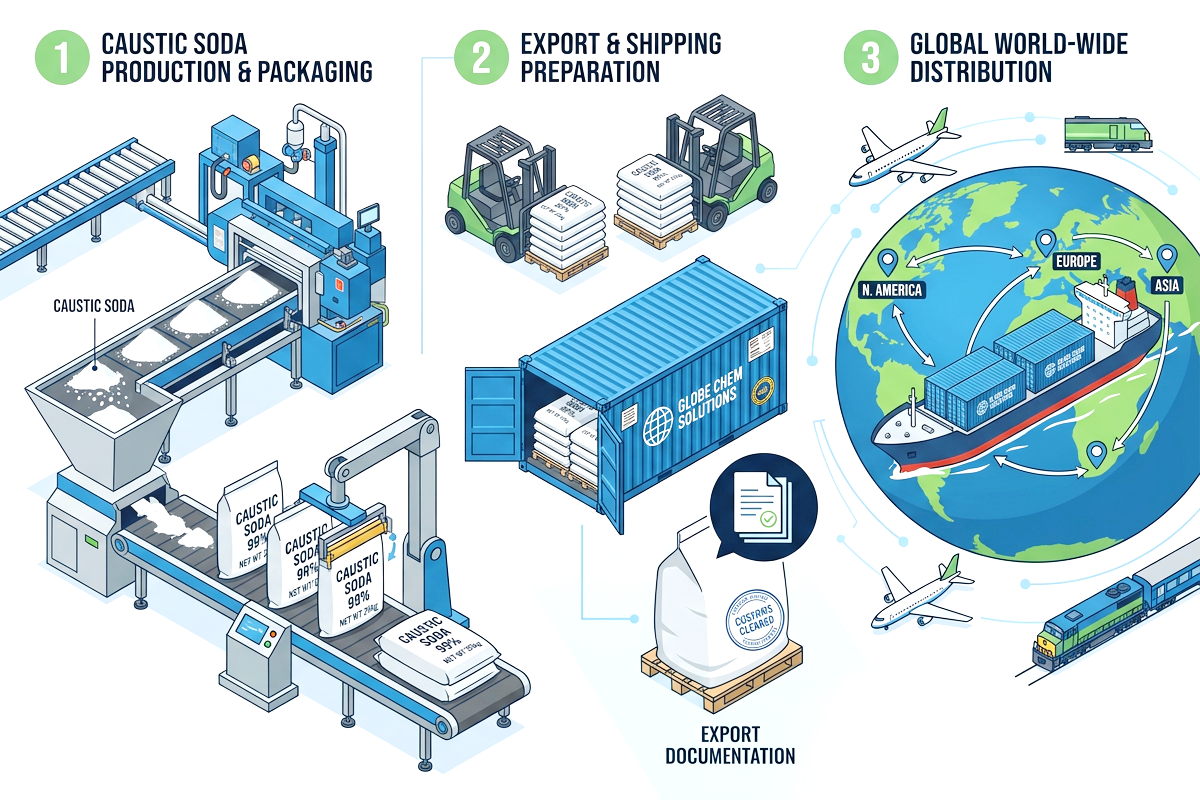
The final packaging depends on the product grade, moisture protection, loading method, container capacity and destination requirements.
For export orders, buyers should confirm bag construction, palletization, container loading and maximum payload before shipment.
Source: Supplier-specific commercial practice; confirm final packaging with the selected supplier.
 Storage & Handling
tore Calcium Carbonate in a dry, clean and well-ventilated area.
Keep bags sealed until use. In addition, protect the product from moisture, contamination and excessive humidity.
High humidity can affect powder flow and may cause caking. Therefore, proper warehouse conditions remain important for consistent handling.
Food-grade material requires appropriate hygiene and contamination-control practices throughout storage and handling.
Source: Supplier SDS and product-specific storage instructions should be confirmed for each grade.
 Quality Control
Buyers should review the supplier’s Specification Sheet and Certificate of Analysis (COA) before approving a Calcium Carbonate grade.
Key parameters may include:
- CaCO₃ content
- Whiteness / brightness
- Particle size / D50
- Particle-size distribution
- Moisture / loss on drying
- Acid-insoluble matter
- Magnesium and other mineral impurities
- Iron content
- Heavy metals, where relevant
- Surface treatment, where applicable
- Oil absorption, where relevant
- Bulk density, where relevant
For specialty applications, additional testing may apply.
Therefore, buyers should define their technical specification before comparing suppliers or requesting commercial offers.
For food-grade Calcium Carbonate, JECFA specifies additional purity parameters, including loss on drying and acid-insoluble substances. Source: https://www.fao.org/fileadmin/user_upload/jecfa_additives/docs/Monograph1/Additive-075.pdf
🌍 Commercial Sourcing Considerations
Calcium Carbonate is a specification-driven product. Therefore, buyers should not compare suppliers on price per metric ton alone.
A practical comparison should consider:
CaCO₃ purity + whiteness + particle size + PSD + surface treatment + packaging + origin + logistics + application suitability
For example, a low-cost coarse GCC grade may not replace a micronized or surface-treated grade in a polymer or coating formulation.
Likewise, food-grade applications require additional documentation and regulatory checks.
As a result, the lowest quoted price does not always represent the lowest total sourcing cost. Source: https://ima-europe.eu/about-industrial-minerals/calcium-carbonate/
 Documents Available on Request
Depending on the grade and application, suppliers may provide:
- Technical Data Sheet (TDS)
- Certificate of Analysis (COA)
- Safety Data Sheet (SDS)
- Product Specification
- Food-Grade / Food Additive Documentation
- Heavy Metal Analysis
- Particle Size Analysis
- Origin Certificate
- Certificate of Conformity, where applicable
- Packing List
- Commercial Invoice
- Other export documentation according to destination requirements
🤝 Need a Specific Grade?
If you are looking for Calcium Carbonate for a specific industrial or commercial application, our team can help identify the appropriate grade, particle size, specification and supply option based on your technical and purchasing requirements.
For a quotation, technical data or sourcing support, contact our team with your required specification, application and target quantity